
Power and Privilege
Some of the thinking behind the series, 'Can I Wear This?'
Love has no gender. Compassion has no religion. Character has no race.
Abhijit Naskar
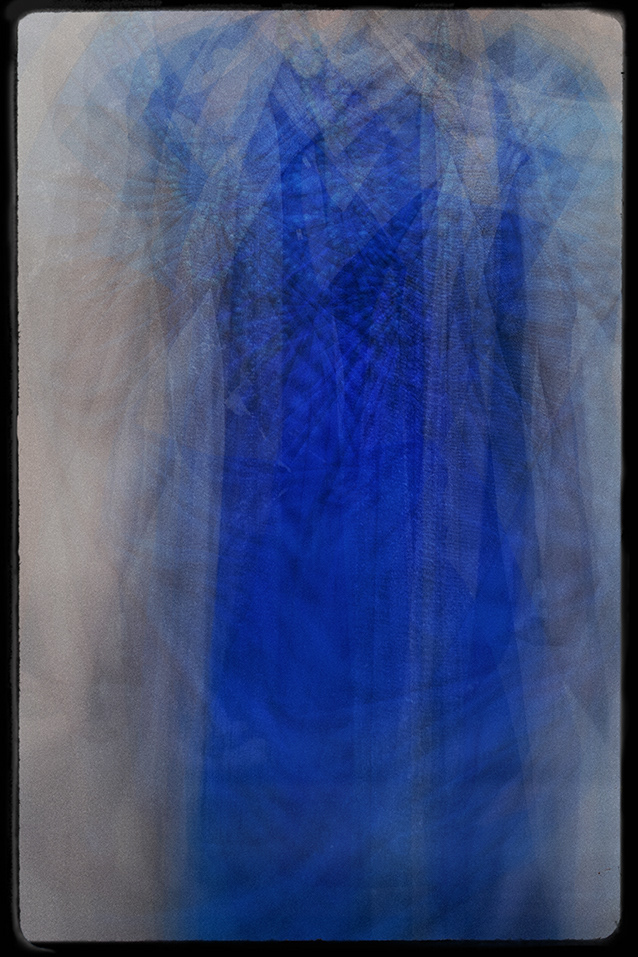
Blue Dress
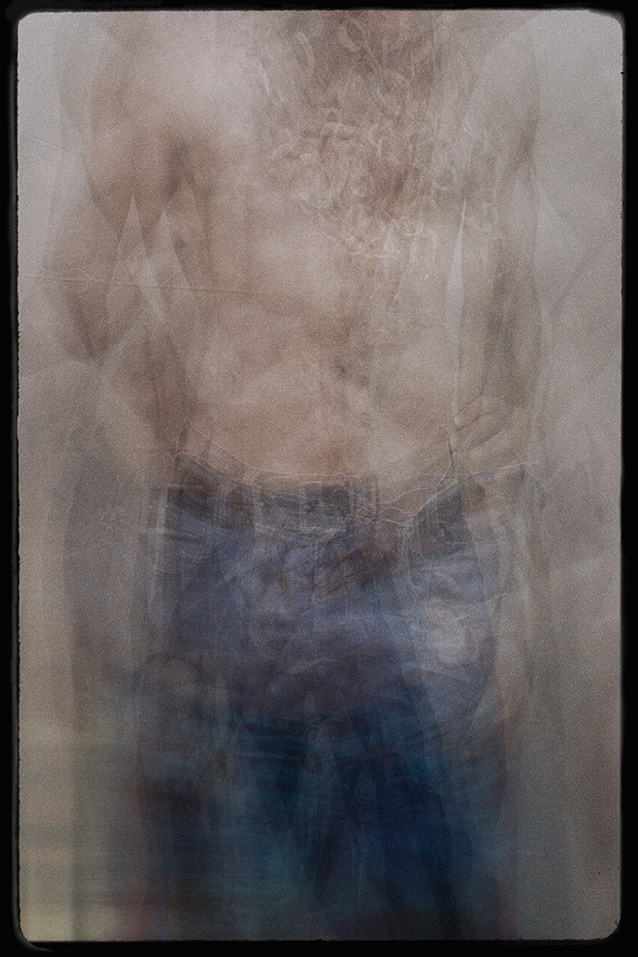
Blue Jeans
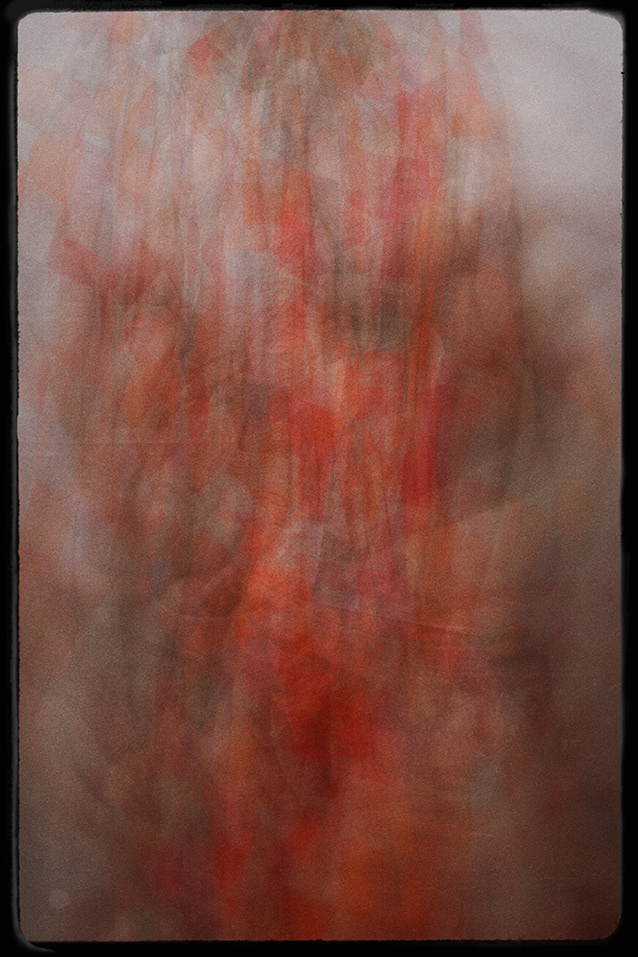
Orange Scarf
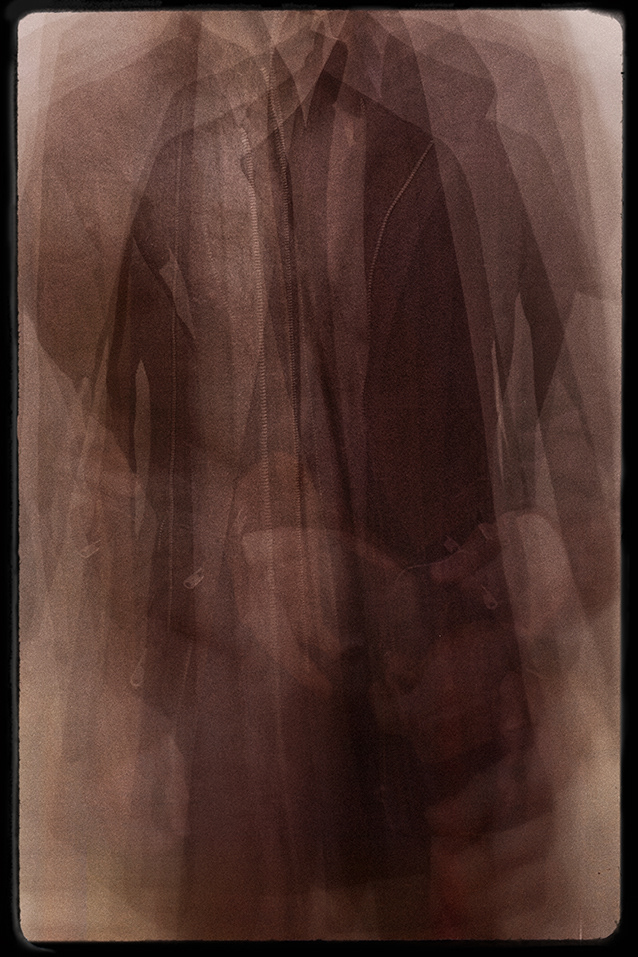
Dress Coat
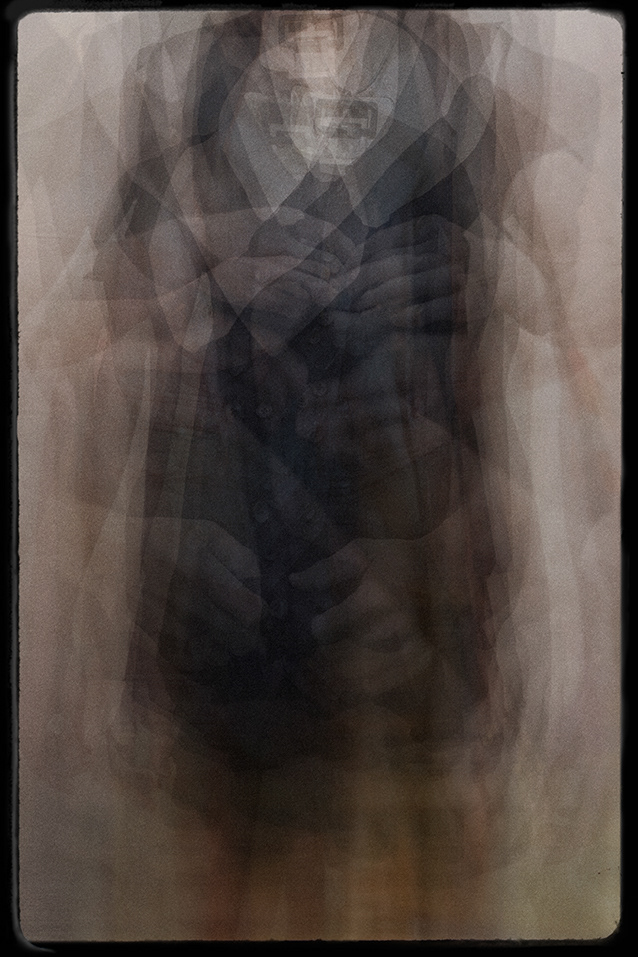
Black Cocktail Dress
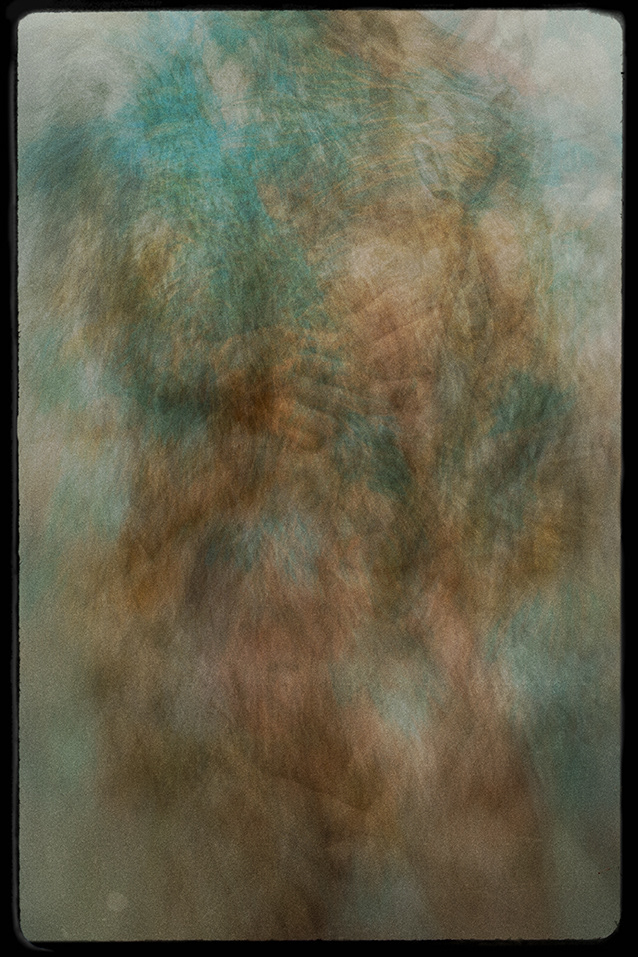
70's Rock Top
This work began as an act of support.
Some of my friends have non-traditional relationships with clothing. They are not gender fluid, but they use what they wear as an extension of who they are with a freedom and ease that most men are never quite permitted. I found it unsettling to watch how the wider community treated them for it. They weren't hurting anyone. If anything, their way of being in the world made them more whole.
So I set out to make images that reflected possible variations of male gender expression.
While researching, I found a deeper connection closer to home. I noticed I was resisting buying an orange scarf. I liked it. But it struck me as too bright. If I, an artist actively working on a series about gender expression, was going to leave a scarf on the shelf because of what society might make of its colour, then there was clearly more at play than I had acknowledged.
The research revealed a long history of social control in which clothing has been the primary instrument. In Roman times, dress tended toward neutral and utilitarian as children played and got dirty, and that was that. By the Medieval period, fabric and colour had become tools of class segregation, defining rank and station at a glance. Later, what historians call the Great Male Renunciation would see men abandon jewellery, bright colours, and ornamental fabrics in favour of the dark, homogeneous, sombre look that survives largely intact today. The boundaries between classes blurred as the boundaries between the sexes hardened.
The line from that history to the culture of toxic masculinity is direct. Clothing encodes expectation. Expectation shapes behaviour. Behaviour becomes identity. The encoding is so old it no longer announces itself.
Rather than propose a solution, the literature suggests that direct challenges only further isolate those in the grip of inherited behaviours — I wanted to pose a question. Can I Wear This? operates on three levels simultaneously: the permission you ask of yourself, the permission you ask of those around you, and the permission you ask of society. By leaving the question open and unanswered, the work aims to chip away at the mental constructs men allow themselves to be placed in regarding presentation and self-expression, without telling them what to do instead.
The subjects are young, aspiring fathers. That choice was deliberate. They occupy a fragile transitional space where they are still impressionable, still shaped by peer pressure, but also the people most capable of changing what the next generation inherits. If the question reaches them, it reaches forward in time.
To prevent any individual from being identifiable, the images are created using Idris Khan's layering method. The artistic influences on the styling came from painters Alessandro Tomassetti and William Bruce Ellis Rankin, whose treatment of the male form carries a softness rarely found in photographic portraiture. Each subject wore a single item of clothing in whatever way he chose. That was the only instruction.
The hands were nearly missed entirely.
A printing error produced a set of pixelated images that were initially dismissed as technical failures. Looking at them again, something shifted. The pixel (the smallest programmable unit of digital vision) was doing something the layered images hadn't quite achieved: it was making visible the process by which identity gets compressed, anonymised, and rendered socially legible at low resolution. Those misprints became the foundation of a separate but related body of work, Proxy Permissions.
Looking at the layered images again after the printing error, the hands became visible in a new way. In the works of Rankin and Tomassetti, hands carry much of the emotional weight. In the 'Can I Wear This?' images, hands tell the story. The everyday act of pulling on clothing, the subtle dialogue between fingers and fabric, the way vulnerability and playfulness emerge not in the face but in the gesture. The images were cropped more tightly than originally planned to bring out that quality. Monochrome images were introduced alongside the colour work to restore some of the tonal gravity the tight cropping had softened, and to draw attention to the fabric itself: at close range, any cloth is simply a weave of thread.
The finished works are presented in a format reminiscent of historical print folios, in deliberate acknowledgment of the Men's Dress Reform Party of the 1920s, a group that tried, largely unsuccessfully, to challenge societal expectations of men's clothing in interwar Britain. The reference is an act of solidarity across a century, and an expression of hope. A hope that one day generations hence will look back and wonder what the fuss was about. That being expressively divergent is simply not about masculinity. It never was. It is about self-expression, character, and the quiet courage it takes to wear an orange scarf...
The words above were written in the company of others. The thinking is not solitary; the ideas are shaped by those who have come before. What you are reading are conversations between myself, my work, and wider fields of thought. In Roland Barthes’ words, the text is a “tissue of quotations,” even when those quotations remain unspoken.
References and Reading
Barry, Ben & Martin, Dylan (2015). 'Dapper Dudes: Young Men's Fashion Consumption and Expressions of Masculinity.' Critical Studies in Men's Fashion, 2(1).
Bourke, Joanna (1996). 'The Great Male Renunciation: The Men's Dress Reform Party in Interwar Britain.' Journal of Design History, 9(1), 23–33.
Crosson Gilpin, Caroline & Proulx, Natalie (2018). 'Boys to Men: Teaching and Learning About Masculinity in an Age of Change.' The New York Times Learning Network. nytimes.com
Edmondson, J. (2008). 'Public Dress and Social Control in Late Republican and Early Imperial Rome.' In Edmondson, J. & Keith, A. (eds.), Roman Dress and the Fabrics of Roman Culture. University of Toronto Press.
Gray, Peter (2014). 'But There Are Many Benefits to Letting Your Kid Play, Letting Your Kid Be.' Toca Boca Magazine. tocaboca.com
Hanson, Paige L. (2010). 'Renaissance Clothing and Sumptuary Law.' University of Michigan-Dearborn.
Kremer, William (2013). 'Why Did Men Stop Wearing High Heels?' BBC Magazine. bbc.co.uk
MacDiarmid, Mark (2018). 'Male Privilege Has Lasting Effects on Boys. I See It in Court Every Day.' ABC News. abc.net.au
Meyer, Elizabeth J. (2014). 'The Danger of Boys Will Be Boys.' Psychology Today. psychologytoday.com
Michalko, Rod (1998). The Mystery of the Eye and the Shadow of Blindness. University of Toronto Press.
Naskar, Abhijit (2017). Either Civilized or Phobic: A Treatise on Homosexuality. Amazon Publishing.
Williams, Matt (2015). 'Five Ways Boys Become Men.' The Good Men Project. goodmenproject.com